Hey there! If you’ve ever wondered about a dish that’s as rich in history as it is in taste, let me introduce you to charoset Recipe. This sweet, chunky mixture isn’t just a Passover staple, it’s a celebration of resilience, family, and flavor. Whether you’re prepping for a Seder or just craving something unique, I’ve got you covered with a 1500-word guide that’s packed with creative recipes, fun facts, and tips you won’t find anywhere else. Let’s dive into the world of charoset recipes and whip up something delicious together!
What Is Charoset, Anyway?
Picture this: a blend of chopped fruits, nuts, and spices, sweetened with honey or wine, sitting proudly on the Passover Seder plate. That’s charoset. It symbolizes the mortar the Israelites used while enslaved in Egypt, turning a tough history into something sweet and hopeful. But don’t let its humble role fool you, charoset is a star in its own right, with flavors that dance between tradition and innovation. From the apple-walnut classic to exotic twists with dates and cardamom, there’s a version for everyone. Ready to explore? Let’s start with the basics.
Fun Facts You Won’t Find Anywhere Else
Want some charoset trivia to impress your guests? Here’s what I’ve dug up:
- In some Sephardic homes, charoset is rolled into balls and dusted with cinnamon, like little truffles. I tried this, it’s adorable and delicious!
- Medieval Jewish cooks used pears instead of apples when fruit was scarce. It’s a fun twist if you want to go old-school.
- The word “charoset” might come from the Hebrew “cheres,” meaning clay, another nod to that mortar symbolism.
These tidbits make charoset even more special, don’t you think?
Traditional Charoset Recipe: A Timeless Classic
Every charoset journey begins with the traditional recipe, think of it as the foundation you can build on. The Ashkenazi version, rooted in Eastern European Jewish culture, keeps it simple and sweet. You’ll need apples, walnuts, a splash of wine, and a hint of cinnamon. It’s quick to make and bursting with meaning. The apples stand for the mortar, the nuts for the bricks, and the wine? That’s the sweetness of freedom. Trust me, once you try this, you’ll see why it’s a Passover must-have.
Exploring Variations: Charoset Around the World
Here’s where things get exciting. Charoset isn’t a one-size-fits-all dish, different Jewish communities have put their own spin on it, and I’m obsessed with the variety. Let’s travel the globe a bit.
Charoset Recipe Sephardic Style
Sephardic Jews, with roots in Spain, Portugal, and the Middle East, go for a richer, stickier charoset. Imagine dates, almonds, and raisins blended into a paste with orange juice and warm spices like cinnamon and ginger. It’s less chunky than the Ashkenazi version and feels like a luxurious treat. I love how it reflects the sunny flavors of its origins, perfect if you want something a little different.
Moroccan Charoset Recipe
Now, let’s head to Morocco. This charoset is a flavor explosion, dried apricots, pistachios, and dates mixed with cloves and honey. The spices give it a kick, while the fruits keep it sweet. I once made this for a friend who couldn’t stop raving about the pistachio crunch. It’s a bold twist that’ll make your Seder table stand out.
Middle Eastern Charoset Recipe
In the Middle East, charoset gets a nutty, fruity upgrade. Think walnuts, almonds, figs, and dates, jazzed up with pomegranate juice and a sprinkle of cardamom. The pomegranate adds a tangy zing that I can’t get enough of, it’s like a little surprise in every bite. This version feels festive and fresh, a nod to the region’s vibrant produce.
Kid-Friendly Charoset Recipe: Fun for the Little Ones
Got kids? Let’s make charoset a family affair! This version swaps wine for grape juice and keeps things simple with apples, raisins, and a touch of honey. My nephew helped me make it last Passover, he loved tossing in the raisins and stirring like a pro. It’s sweet, easy, and a great way to get kids excited about traditions. Plus, they’ll feel proud serving it up at the table.
Also read: Heaven on Earth Cake: A Chef’s Guide to Divine Desserts
Charoset Recipe Without Wine: Alcohol-Free Bliss
Not everyone’s into wine, and that’s totally cool. This charoset recipe without wine uses grape juice instead, keeping the sweetness intact. Mix apples, walnuts, grape juice, honey, and cinnamon, and you’ve got a dish that’s just as tasty and inclusive for all ages. I made this for a friend who avoids alcohol, and she said it was her favorite part of the meal. It’s proof you don’t need wine to make charoset shine.
Charoset Recipes Dessert: Sweet Treats Beyond the Seder
Who says charoset is only for the Seder plate? Let’s turn it into dessert! Here are two ideas I’ve played with:
- Charoset Parfait: Layer your charoset with yogurt or whipped cream in a glass. Add a sprinkle of nuts on top for crunch. It’s light, pretty, and feels fancy without much effort.
- Charoset-Stuffed Dates: Stuff pitted dates with charoset for a bite-sized treat. The combo of sticky dates and spiced fruit is pure heaven, I brought these to a potluck, and they vanished in minutes!
These charoset recipes dessert-style extend the Passover vibes in the sweetest way possible.
Best Charoset Recipe: My Ultimate Crowd-Pleaser
After experimenting with all these versions, I’ve landed on what I think is the best charoset recipe. It’s a mashup of traditions, apples and walnuts from the Ashkenazi side, dates from the Sephardic, and a hint of ginger for warmth. You can use wine or grape juice, depending on your vibe. It’s got texture, flavor, and a little something extra that makes people ask, “Can I have the recipe?” Spoiler: You’ll get it at the end!
Nutrition Facts: Why Charoset Is Good for You
Charoset isn’t just tasty, it’s packed with good stuff. Here’s the scoop on its key ingredients:
- Apples: Loaded with fiber and vitamin C, they keep your gut happy and your immune system strong.
- Nuts: Walnuts, almonds, and pistachios bring healthy fats, protein, and antioxidants. They’re little powerhouses!
- Dried Fruits: Dates, raisins, and apricots offer natural sugars, fiber, and minerals like potassium.
- Honey: This natural sweetener has antibacterial perks and might even help with allergies.
- Spices: Cinnamon and ginger fight inflammation and aid digestion—small but mighty!
In moderation, charoset is a guilt-free way to enjoy something sweet and symbolic. Who knew history could taste this good?
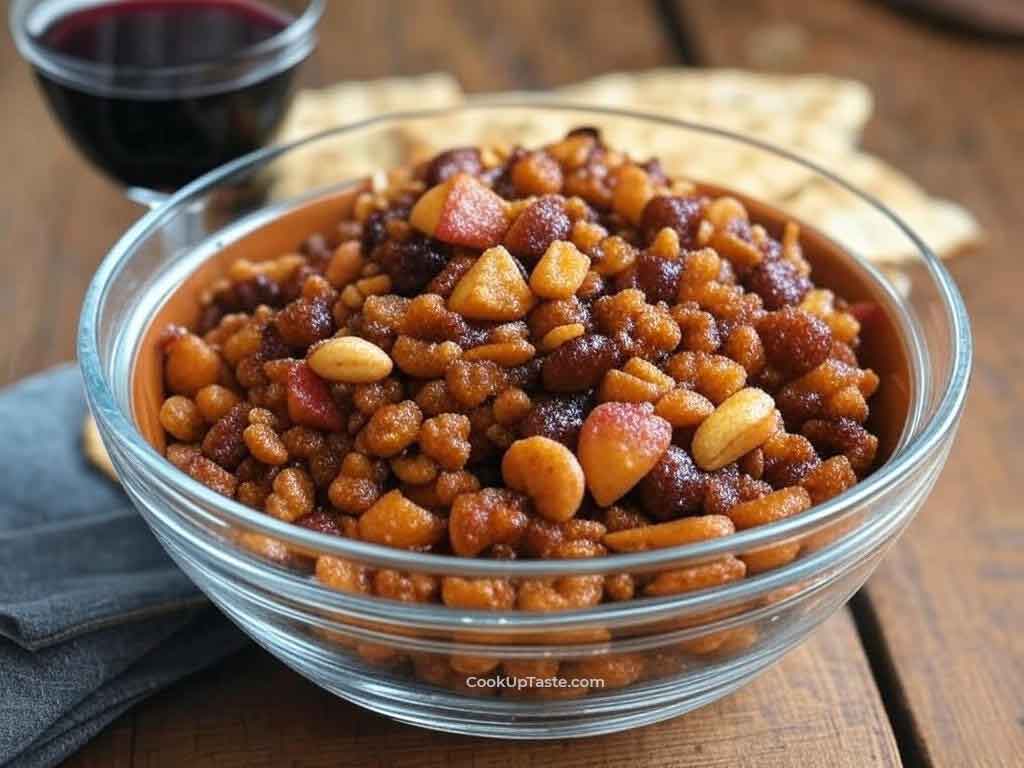
Best Charoset Recipe
Equipment
- Cutting board
- Spoon for mixing
Ingredients
- 2 medium apples peeled and chopped (about 2 cups)
- 1/2 cup walnuts chopped
- 1/2 cup dates pitted and chopped (about 6-8 dates)
- 1/4 cup sweet red wine or grape juice
- 1 tablespoon honey
- 1 teaspoon ground cinnamon
- 1/2 teaspoon ground ginger
Instructions
- Peel and chop the apples into small pieces.
- Chop the walnuts and dates roughly, keep some texture!
- Toss the apples, walnuts, and dates into a mixing bowl.
- Pour in the wine or grape juice, then add the honey, cinnamon, and ginger.
- Stir everything together until it’s well mixed.
- Cover and let it sit for at least 1 hour (or overnight) in the fridge for maximum flavor.
Notes
Try pecans instead of walnuts for a buttery twist.
Add a splash of lemon juice if you like a bit of zing.
Make it a day ahead, it gets better with time.
Serve with matzah or spoon it over ice cream for dessert.
Nutrition
Tips to Make Your Charoset Pop
Before we get to the recipe, here are my go-to tips:
- Use fresh, crisp apples for the best texture, Granny Smith adds a nice tartness.
- Toast your nuts lightly for extra flavor. It’s a game-changer!
- Let it sit overnight if you can, the flavors get even better.
- Play with spices, nutmeg or allspice can shake things up.
- Serve it chilled with matzah or warm as a dessert topping. Versatility is key!
Now, let’s wrap this up with a recipe you can make right at home.






thanks for sharing this recipe <3
qXK OAp gPwbbdz fZAJe EJXErdST QTixrhTi